Showing posts with label Emily Dickinson. Show all posts
Thursday, 16 February 2017
UPCOMINGS EVENTS - IRELAND & ITALY
A month to the day since I last blogged. Good Lord, where does the time go? Spring has sprung, at least!
I had one deadline of 31st January (for novel #4, Becoming Belle) and now I'm on a deadline for my s/story collection, Joyride to Jupiter. So, between those two things, and much else, life has been hectic. But it's all good - New Island and I are discussing covers (such a joyful thing) for Joyride to Jupiter so the excitement for its June publication is building.
I'm also busily prepping for my masterclasses at the Irish Writers Centre (the course is sold out but there's a waiting list you can join.)
Meanwhile, I have a few events coming up:
- I'll be reading at the launch of the Arlen House poetry anthology Washing Windows, 2pm Saturday the 4th March in Pearse Street Library, Dublin.
- I'm giving a short story seminar in Florence, Italy on the 9th March at St Mark's Church at 2pm. And a reading that evening at the same venue at 6.30pm. More here.
- I will be interviewing my friend, and fellow The Peers member, Alan McMonagle about his début novel Ithaca on Monday 13th March in Backstage Theatre, Longford at 8pm, as part of the book's launch night shenanigans.
- I'm also giving a short story seminar at the Mountains to Sea festival in Dun Laoghaire on 25th March at 11am. More here.
- Also at Mountains to Sea I am taking part in the Heroes reading event and I'll be talking about (surprise, surprise) Emily Dickinson. Event info here.
Tuesday, 6 December 2016
MISS EMILY - BOOK ON ONE
![]() |
| Emily's Homestead - pic from Emily Dickinson Museum |
Miss Emily is the Book on One, on RTÉ Radio 1, from 12th Dec, timely for Emily's 186th birthday which is on the 10th of December.
Tuesday, 25 October 2016
Illustrators Guild of Ireland exhib - Emily Dickinson inspired
![]() |
| Image from the exhib - by artist Niamh Sharkey |
From their FB invitation:
'The Luan Gallery, Athlone presents "Without The Words". An exhibition of work by over 40 members of Illustrators Ireland. The show opens on Saturday 5th of November at 6pm. We are thrilled to have the following speakers on the night:
PJ Lynch - Laureate na nÓgAoife Murray - Children's Books Ireland
Margaret Anne Suggs - Illustrators Ireland
Please come and join us, you will be most welcome.'
Tuesday, 28 June 2016
PARIS & EDIS AFTERS - report and pics
| 'Between my finite eyes -' Emily D. |
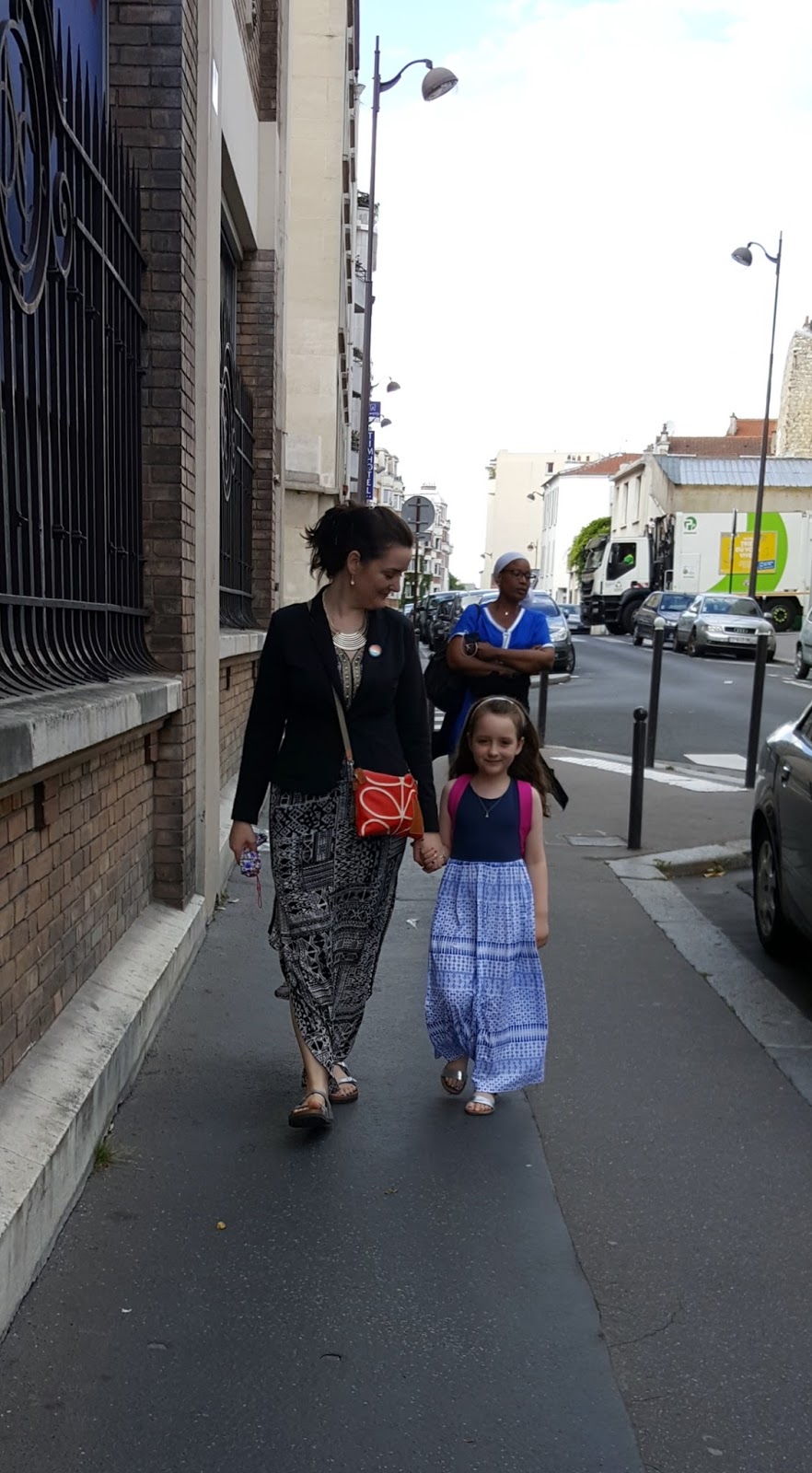
I was at the Emily Dickinson International Society (EDIS) Conference this past weekend in Paris, which was, of course, trés jolie: Emily and Paris, two of my favourite things all wrapped up together. We enjoyed the 'blue and gold' of Emily D's June - the sun shone often - though there was more than the odd 'curious Cloud' too.
| Butte aux Cailles graffiti & Juno |
| Fondation des États Unis |
| Clark Lunberry ED text on the pond at Parc Montsouris |
It's always lovely to reconnect with fellow Emily fans and I even managed to overcome shyness and talk to some ;) The theme of this year's conference was 'Experimental Dickinson' (apt) and I heard papers on Emily's letters (especially those to her beloved SIL, Susan, as well as to her friend, and posthumous editor, Thomas Wentworth Higginson).
| Dr Emily Seelbinder with Juno, both sporting Emily D T-shirts |
Also, some great papers on teaching Dickinson, including a fascinating one from North Carolina-based scholar Emily Seelbinder, who challenges her students to create an objet d'art using Dickinson's poetry as a jump-off. (My kind of class). The students have produced fantastic work, everything from art books, to fortune cookies containing Dickinson aphorisms, to a boardgame: 'Dickinson Dash to the Death', and a T-shirt connecting Kanye to Emily :)
Georgiana Strickland's paper was about the discography she is compiling of interpretations/versions of Emily's poetry that have been set to music. We were treated to various extracts from different composers, including Aaron Copeland and, my favourite, Craig Hella Johnson.
| Natasha et Linda |
That paper set us up nicely for Saturday evening's concert 'The Poet and the Muse: Dickinson in Song', with soprano Linda Mabbs and pianist Natasha Roqué Alsina. It was fascinating to hear, for example, four different composers' versions of 'Will there really be a "Morning"?', performed one after the other. Linda Mabbs is a beautiful singer and her interpretations were moving and funny, and her explanations of the arrangements were really informative.
| ED and Celebrity panel: Paul, Páraic & Elizabeth |
I went to a panel on ED's dealings with literary fame - her own and others'. It was great to hear papers by Elizabeth Petrino, Páraic Finnerty and Paul Crumbley that looked at different aspects of 19th C literary celebrity and where ED saw herself within it all. And how she may have had a firm eye on posthumous celebrity. Fascinating stuff. (Páraic Finnerty has just reviewed my novel about ED, Miss Emily, in Breac - a wonderful review, I am honoured.)
| Lunberry 'Written on Air' installation - Fondation des États Unis, Cité Universitaire |
There was a lot of overlap as ever with the content and themes that people chose to present on. Emily D's penchant for concealment and revelation came up a lot, the known/unknown nature of her life and work.
![]() |
| Me and Ju, on our way to the concert and banquet |
| Banquet bread and wine :) |
| Lovely people: EDIS President Martha Nell Smith with conference organiser Antoine Cazé |
We had the conference banquet on Saturday night in the Fondation Deutsch de la Meurthe in the gorgeous, balconied, wood-lined Grand Salon. Despite making it known we were vegetarians in advance, there was little for us to eat. Even the ratatouille contained fish (why? why?). So we ate bread and drank wine and, sure, what else would you need?! Juno was delighted to meet other EDIS members' children and had a ball with them, outside the fondation building, running about and chatting. (I must add, though, that the lunches at the conference were outstanding - the choccie tart! The cheesy puffs! The salads! All very delicious.)
| View from the Tour Eiffel |
We had four full days and two half days in Paris and, apart from the conference, we managed to squeeze in a lot: shopping, sightseeing, scoffing, walking, art etc. The area we stayed in, the Butte aux Cailles, is gorgeous. I had stayed there before and loved its olde worlde charm. It's full of sweet bars and restaurants and there is the most incredible graffiti/wall art everywhere.
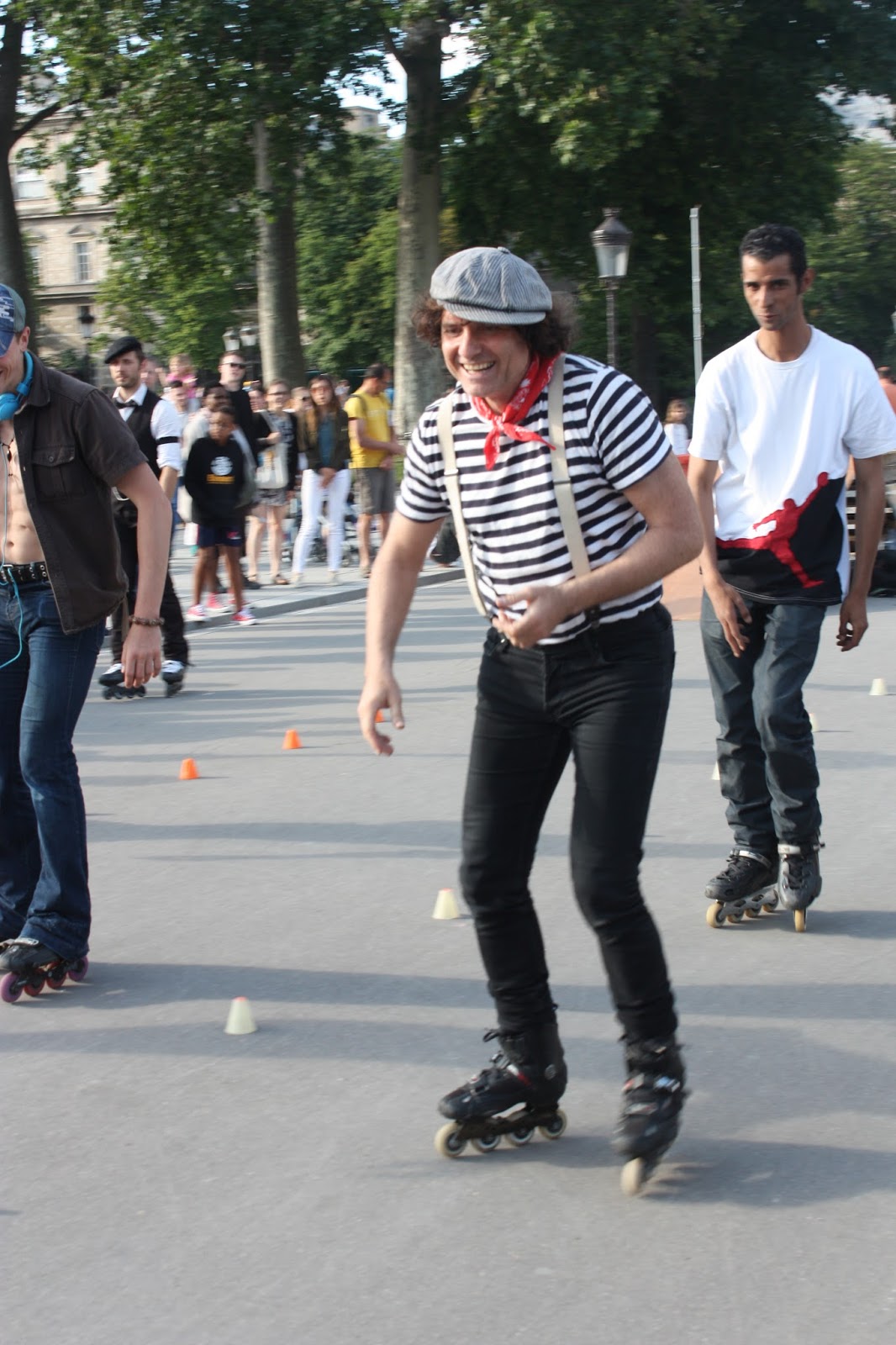
| Skaters outside Notre Dame - they were brilliant |
| Finbar at Notre Dame |
| The Seine |
![]() |
| Deyrolle window display |
![]() |
| Forlorn and covetable dolly at the marché in Vanves |
| 'Standing Girl Nude, Turned to the Left with Arms Crossed' - Paula MB |
We also went to the top of the Eiffel Tower - such joy to see Juno's delighted face. And we stumbled on the fact that there was a temporary exhibit of Paula Modersohn Becker's paintings at the Palais de Tokyo. I wrote an (unpublished) novel about Paula years ago, so it was great to re-connect with her and see some work that I have never seen because it is privately owned. That was a real bonus.
| Grass jelly drink, anyone? |
And we watched the Ireland vs France match in a bistro in St Michel, having failed to get into two jam-packed Irish pubs. That was fun until our team were hammered. We consoled ourselves in Notre Dame Cathedral: mass in progress, hymns being sung, candles twinkling. Heaven felt near, as Emily D. might say.
![]() |
| Falafel, Le Grenier style |
![]() |
| George Sand's house - tea garden roses 'Nobody knows this little Rose - It might a pilgrim be...' ED |
![]() |
| George Sand's house |
![]() |
| I wanted one of these so badly. Too pricey, though :( |
![]() |
| Métro station ads are the best |
And at some point I guess I will stop feeling exhausted out of my brains and start some proper work. I have rewrites on novel #4 to tackle and class prep for Saturday's IWC class. For now, I will just let myself feel I still have one foot in Paris. With Emily and all those who love her.
![]() |
| The EDIS conference poster |
| 'I've seen a Dying Eye Run round and round a Room —' ED |
Monday, 18 April 2016
MISS EMILY REVIEW AT DBR
Writer Adam Wyeth has given Miss Emily a beautiful review in this essay at the Dublin Review of Books. I am posting it in full here in case it disappears from their site.
THE THING WITH FEATHERS
Adam Wyeth
Miss Emily, by Nuala O’Connor, Sandstone Press, 350 pp, €8.99, ISBN: 978-1910124550
Nuala O’Connor’s novel Miss Emily is more than a portrait of a poet executed with exquisite precision. It offers a fresh, enhancing approach to Dickinson’s inner life, showing a woman with zest and independence of mind.
One of the big mysteries that continues to dog Emily Dickinson critics and biographers is why one of America’s foremost poets spent most of her time indoors, never married and indeed hardly left her childhood home till the day she died? Was she depressed, agoraphobic or bipolar? While there is no conclusive evidence that she suffered from any such condition, this hasn’t stopped critics from drawing a myriad of conclusions. While speculation is well and good, the level of scrutiny and diagnoses in recent years has often tended to be reductive, taking from the work and the poet herself. So it is refreshing that in Nuala O’Connor’s meticulously honed new novel Miss Emily the story avoids any labels and instead offers a fresh, enhancing approach to Dickinson’s inner life – showing a woman with zest and independence of mind and an artist absorbed in her work and art.
This is not to say that Miss Emily doesn’t explore deeper and darker aspects. Everything in the novel is touched with a darkness that recoils and simmers under the surface of everyday life. While Miss Emily is fiction, O’Connor’s research on the poet is extensive and we get a strong sense of Dickinson’s true personality. Enthusiasts will recognise many poetical strands and biographical titbits woven into the narrative. As an accomplished poet herself, O’Connor is well versed in metaphor and telling the truth slant. Indeed it is her lyrical gift at skilfully lifting daily domestic activities into something almost mythical, rich with resonance and suggestion that makes Miss Emily such an engrossing read.
The novel opens in Amherst, Massachusetts. Homestead, the Dickinson family home, is in disarray after their long-term Irish maid has left to create a family of her own. The smell of burnt potatoes presages another Irish maid to follow. Each chapter alternates between Emily Dickinson and her maid-to-be Ada Concannon. We first meet Ada, on a sunny day in June, aged seventeen, soaking herself in the river Liffey, against her parents’ wishes. The bucolic image linked to the river goddess is the first of many interlaced mythological symbols. The river also signals a longer journey to follow across the water to the New World.
Despite the upstairs-downstairs scenario, Emily and Ada immediately strike up a close friendship, both sharing a sense of mischief and a love of baking. Although the American poet and Irish maid may appear to be poles apart the dual point of view creates some intriguing parallels and insights. Dickinson describes Ada as having, “a superior, petulant face, but when she smiles, she glows like a window opening on a bright day. I want to make her smile.” Does the final line offer a slight hint of something else desired, as well as friendship? The hidden suggestion also extends to the intimate relationship Dickinson has with her sister-in-law. Miss Emily loves to spend time with Ada and says how she admires the Irish, “ … how they spin a narrative around every small thing. I feel somewhat Irish in my core.” However, Emily’s brother Austin is less enamoured of Ada and offers the more common prejudicial attitude towards the Irish. “Do not be fooled by her mellifluousness — all Irish people lie … You have to understand that there is a certain island madness about the Irish; they are unhinged and vicious.”
At times the intimate friendship and psychological drama that unfolds have intimations of a Strindberg play. In fact, Strindberg’s similarly titled haunting masterpiece Miss Julie takes place in one domestic setting, mostly in the kitchen – as does Miss Emily – between the lady of the house and her servant. No doubt the author is more than aware of this relation and the similar title is a nod in the play’s direction.
It takes a writer of keen perception to portray and capture a life in a whole novel within a confined setting; O’Connor does so with remarkable tenacity and panache. Her sheer relish for rendering nineteenth century American domestic life and her gift for finding the mot juste brings the Dickinson home to life. “I am in the habit of this house, and it is in the habit of me,” Dickinson says. Homestead becomes almost a character itself. In Freudian analysis the home is a symbol of the self. Thus every item and room of the house can be seen as a different part of the poet’s psyche.
Exquisitely detailed descriptions of home care and cooking ripple and steam off every page. Every domestic moment is magnified with the crisp artistry of a Vermeer painting. But the level of intense, sensory detail displays more than just atmosphere. As well as conveying Dickinson’s intense and piercing perception, each description lends itself to an ever-deepening tapestry of patterns and symbolism, revealing the darker emotions and unconscious stirrings beneath. The zoom lens clarity and visual storytelling become a superb and subtle plot device foreshadowing traumatic events to come. Moreover, like so many period dramas, it is the stiff-collared, hemmed-in Puritanism that makes each scene all the more tantalising, as when Ada puts her lips to her admirer, Daniel’s, cup, to “drink back the lukewarm dregs of his tea”. As much as O’Connor does an assured job for capturing the language of the period, she avoids getting entangled in any antiquated purple prose. The carefully selected concrete details within descriptions are poetry enough.
This bright window into Dickinson’s private world also offers many insights into her poetical development. A key moment is when Dickinson decides to wear only white. “My very whiteness will be my muse,” she says. It acts as the foundation of her poetic vocation, much like an actor embodying the character in a play when he or she puts on the costume. She is born again. “Like a revenant,” her mother remarks. Rather than seeing Dickinson’s sartorial decision as some mental infliction, O’Connor shows it as a moment of artistic epiphany, turning Dickinson’s desire for crisp white clothing as a moment of metamorphosis. It is as if she has turned herself into a clean white page. Such epiphanic moments are well recorded with many major writers. For Synge, it was when he was encouraged by Yeats to go and live among the people of the west of Ireland, to learn their language and write about their ways. For Beckett it was the decision to write in French that allowed him to purify his prose and move out of Joyce’s overbearing shadow.
Instead of getting caught up in the impossible task of diagnosing the poet as having a mental illness, critics might be equally attentive of the mad world she retreated from. No man is an island, but all artists need to withdraw from the world to create their work. “Hope is the thing with feathers” is one of Dickinson’s most famous lines. It is that delicate, elusive thing in her work that continues to inspire succeeding generations. Executed with exquisite precision, Miss Emily is more than a portrait of a poet. Like a Dickinson poem itself, it is a rare bird of radiant plumage darting through the air, striking and transcendental but impossible to pin down.
Thursday, 10 December 2015
HUMAN RIGHTS DAY - STORY & READING
![]() |
| Original image, developed by the Make Rights Real team |
For Human Rights Day I've a new story online in The Irish Times, 'The Turnip Slave'; other contributors include Anakana Schofield, Martina Devlin & Sarah Bannan Keegan.
And tonight I am reading my story Blue Rose at the Bar of Ireland for Oxfam.
*
This from the Make Rights Real site:
'To mark Human Rights Day 2015 (10th December), Make Rights Real has teamed up with The Irish Times and has invited seven well-known authors to contribute a piece of original writing inspired by the Universal Declaration of Human Rights. Their work is being published this week, under the banner of ‘Writing Rights’.
Sarah Bannan, Sara Baume, Martina Devlin, Martina Evans, Eoin McNamee, Nuala O’Connor and Anakana Schofield have contributed work to ‘Writing Rights’, ranging from poetry to creative fiction to factual pieces. Each piece is accompanied by an original image, developed by the Make Rights Real team. Each author has chosen a different Article of the Universal Declaration as the starting point for their work, and each has taken a very different approach to ‘Writing Rights’. We hope you enjoy the results…
Please note: the views expressed in these works are the views of the author, and in no way reflect the views or opinions of the Irish Human Rights and Equality Commission or The Irish Times.'
*
Thursday, 3 December 2015
MISS EMILY XMAS GIVEAWAY
It being almost Christmas, and nearly D-Day for postage abroad, I am giving away a copy of Miss Emily to one reader of this blog. I will post to anywhere in the world. All you have to do is leave a comment on this blogpost to say you would like to be in the draw. Simples. (And then come back on Sunday to see if you have won!)
Tuesday, 27 October 2015
'WHAT EMILY WORE' ON SUNDAY MISCELLANY
| Emily Dickinson doll by American Historical Society |
The Sunday Miscellany Live programme I took part in in Donegal a few weeks ago was broadcast on Sunday on RTÉ Radio 1 - my piece is called 'What Emily Wore' and is about Emily Dickinson's clothes and image. Here's the link to the programme. I'm first up :) Also featured are Denise Blake and The Henry Girls, among others.
Thursday, 22 October 2015
SUNDAY MISC., RUFUS WAINWRIGHT & BIRR CASTLE
Sunday Miscellany Live, which I took part in in Donegal on the 4th October, will be broadcast over the next two Sundays. If it follows the order of recording, I'll be first up this Sunday, talking about Emily Dickinson's clothes. See here for more.
*
Tonight I head to Sligo for a very lovely event featuring Rufus Wainwright early tomorrow afternoon. He will give a talk on Creative Minds, hosted by the US Ambassador to Ireland at the Model at Niland. As many of you know I am a HUGE Rufus fan so it's a bit of a thrill to get an invitation to this. I even got to submit a question to Rufus in advance. If it's asked, I'll let ye know :) Then tomorrow night I'm at Rufus's Sligo Live gig. Excitement!
*
Sunday I'm reading from Miss Emily, and some Emily poetry, at a Gothic night in Birr Castle. Described on their website as follows:
The Twilight Hour – An evening of Gothic Music and Literature and Trickery with Nóirín Ní Riain & guests. Join us at Birr Castle for this very special evening with Nóirín Ní Riain and guests. Oíche Shamhna is a magical time with strong roots in ancient Celtic Ireland. This evening will celebrate music and literature linked to All Hallows Eve exploring much loved traditions, songs, folklore, ghost stories, poetry and lots of haunted fun in the gothic castle.
Booking essential as places are limited. Pre-paid
event with Tickets €25.00.
Adults only.
Thursday, 15 October 2015
ANNAGHMAKERRIG & EMILY D'S CONSERVATORY
| Tyrone Guthrie Centre, Annaghmakerrig |
![]() |
| Supergrover admiring the art in our Annaghmakerring bedroom |
| Annaghmakerrig Lake |
| The gardens here are aglow with dahlias |
| Desk view, Annaghmakerrig |
| Chestnuts |
| Art in the hallway |
*
The following is the latest newsletter from the Emily Dickinson Museum:
![]() |
| Architects' rendering of the rebuilt conservatory |
Emily Dickinson's
conservatory was removed in 1916. 100 years later, we're bringing it back. The
bedroom, the garden, the kitchen: all are essential spaces that quickly spring
to mind when thinking about the physical locations that inspired Dickinson's
poetry. The conservatory, built by her father when the family returned to the
Homestead in 1855, is another. In this diminutive greenhouse Dickinson
maintained her link to the vibrant natural world during the frigid New England
winters. She tended flowers "near and foreign," as she wrote to
Elizabeth Holland in March 1866, in a space six feet deep and seventeen feet
wide where she had "but to cross the floor to stand in the Spice
Isles."
The deep connection
between Dickinson and her horticultural pursuits permeated her poetry and daily
life. Imagine dirt under the poet's fingernails as she wrote the poems that
immortalized flowers blooming in her garden, home, and Amherst wilderness. The
conservatory allowed her to follow this passion year round. Through its
windows, Dickinson could view the gardens and orchard that she frequented in
the warmer months. From the native species and fragile exotic specimens she
grew inside would come the blooms and bouquets sent with letters and poems to
her beloved friends in even the coldest months of the year. To tell the
Dickinson story more fully we need to restore the conservatory.
![]() |
| 1916 image of Emily's conservatory |
Dismantled in 1916,
many of the conservatory's original architectural elements - including its
window sash and original door - survive. In the past two years archaeological
investigations of the southeastern corner of the house where the conservatory
stood have unearthed its foundations and other important historical details.
With photographic, documentary, archaeological, and even poetic evidence in
hand, we're ready to bring Emily Dickinson's conservatory back to life. But
we'll need your help to do it.
Our fundraising goal
for reconstructing and maintaining the conservatory is $300,000, of which over
$100,000 has already been raised.
Since its founding in
2003, the Emily Dickinson Museum has undertaken several projects that provide
visitors with a more authentic understanding of the world inhabited by the
Dickinsons. The restoration of Emily Dickinson's bedroom and library, return of
the hedge and fence that connect the Homestead and Evergreens properties,
repainting of the homes in their historic colors, and, coming soon, an heirloom
orchard allow visitors to step back in time through a personal encounter with
the poet's world possible nowhere else. The conservatory will add another
critical detail to that immersive experience.
In her letter to Mrs.
Holland, Dickinson also wrote that "We do not always know the source of
the smile that flows to us." We hope that this project provokes many
joyful smiles among those who care about the Museum's mission of interpreting
and sharing the story of Emily Dickinson and her family. You can express a bit
of that joy by contributing to making the conservatory a reality. We thank you
in advance for your support of this latest step in returning the Museum grounds
to a place Emily Dickinson would have recognized and in which she would have
felt at home.
Donate to the
Conservatory Reconstruction Fund by contacting the development office at
413-542-5084 or development@EmilyDickinsonMuseum.org.
Or donate online here.
Subscribe to:
Posts (Atom)