Showing posts with label guest blog. Show all posts

Thursday, 14 August 2014

The Author, Naked - guest blog from Tom Vowler

Writer & editor Tom Vowler
Today I welcome award-winning writer Tom Vowler, an old friend of this blog. Tom has written a guest post on writing through difficulties, encompassing his journey into writing. His second novel That Dark Remembered Day came out this year and has been described as 'A thought-provoking and beautifully written thriller.' 

Tom is both novelist and short story writer and he lives in south west England. His debut story collection, The Method, won the Scott Prize in 2010 and his novel What Lies Within was published to critical acclaim. He is co-editor of the literary journal Short Fiction and an associate lecturer in creative writing at Plymouth University, where he’s completing a PhD looking at the role of the editor in fiction. More at www.tomvowler.co.uk
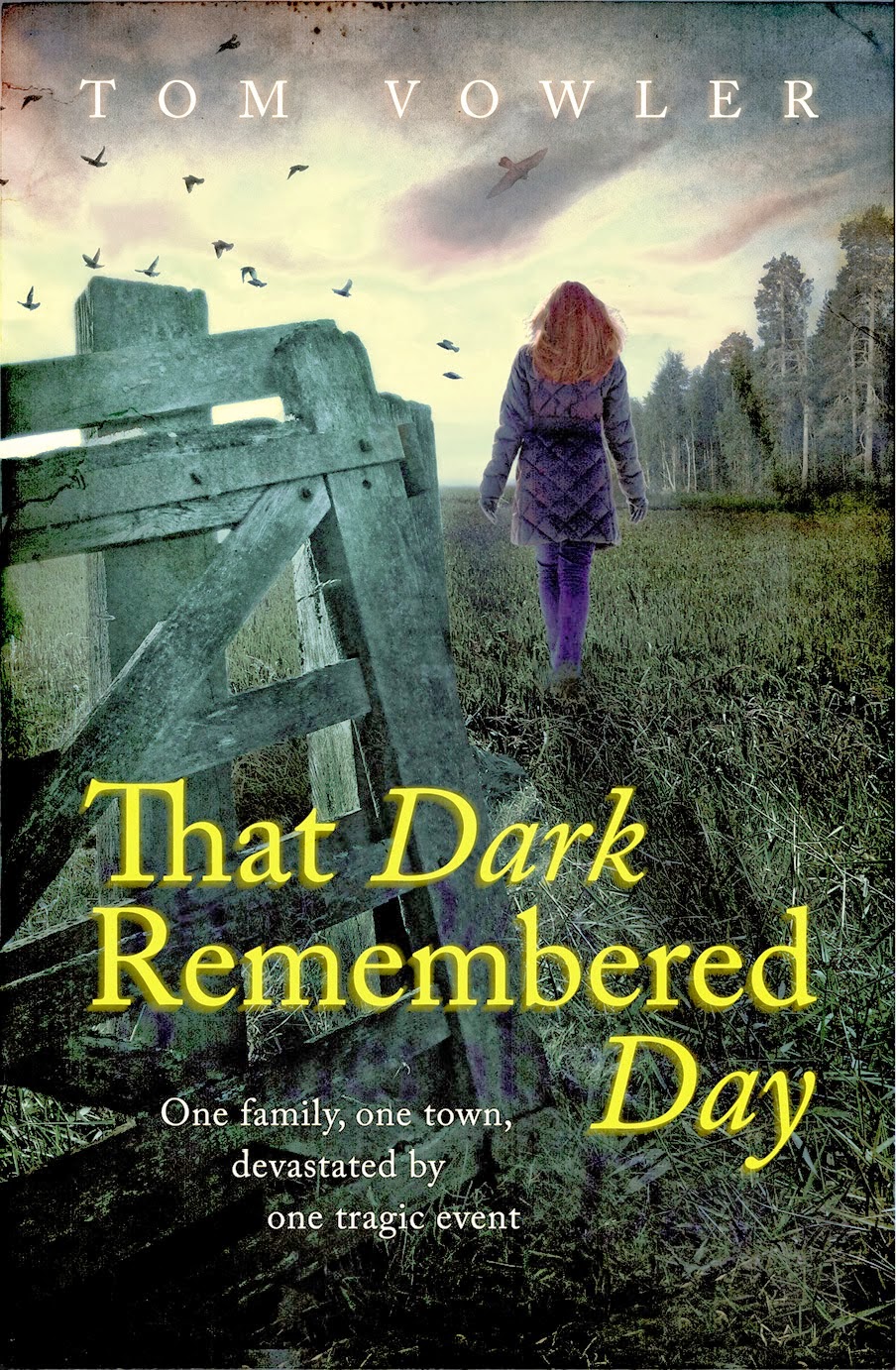


The Author, Naked

To borrow from Orwell: 'Writing a book is like a long bout of painful illness. One would never undertake such a thing if not driven by some demon.' Perhaps too much is made of art’s rigours, its demands – especially by those fortunate enough to make a living from it – but certainly my current novel exacted a personal toll. It took something from me and subsequently a period of recuperation was required. During this brief time out I reflected on the whys of writing, the choice someone makes to spend a couple of years or more alone, on a single project, riddled with self-doubt, with no guarantee of success.
 
Perhaps all authors fall into writing, a happy accident resulting from combined forces, a meeting of opportunity, obsession and a little madness. Certainly I had a fondness for language, a love of storytelling, despite coming late to books, but that goes for most readers, most of whom don’t opt for a mimetic approach. My first dalliance with writing fiction came courtesy of an illness that left me housebound for a number of years. After watching all the television and reading as much as I could, an outrageous notion took root: how hard could it be to write a book? Fortunately, in the beginning, there exists a glorious naivety, utter ignorance of not only how tough it is to write something of merit, but the improbability it would see the light of day. 

Of course, first scribblings are generally of little value, beyond the lessons learned from their attendant mistakes, and that first outing – horribly overwritten, horribly autobiographical – will, I hope, never find physical (or electronic) form. But I had some small sense of what was involved, what was at stake, of what it took. And still I went back for more. 

Later, as illness resumed, I turned to the short story – that most demanding of forms, but one that suited my limited bursts of good health – and fell in love with its bravado, its thrilling potential. A collection followed, but still the novel wouldn’t let go, its sprawling palette, its potential for the epic seducing.

Back, then, to extraction. This toll I spoke of. With my first novel, What Lies Within, the research was harrowing at times, yet I managed to maintain a distance from it. But, perhaps because of the subject matter – the horrors of war and its contrails – That Dark Remembered Day was different. Also, for a large part of its composition my health was poor, leaving me unable to work on it more than a few hours a day, often less, the experience an intense and gruelling one. I had also become obsessed with a piece of non-fiction, J. A. Baker’s The Peregrine, which somehow mirrored my character’s immersion in nature during his psychological breakdown. More than ever I mined my own emotional life for this book, method-acting, if you will, from a bank of known traumas as I breathed life and flaws into my characters. It felt like I had given it everything, left nothing on the field, as sportspeople are prone to say. To borrow from Hemingway this time: ‘There is nothing to writing. All you do is sit down at a typewriter and bleed.’ Again I’m reluctant to overplay this: writers aren’t firefighters, nurses, miners. Nobody (other than ourselves) holds a gun to our heads.

Also, this novel is probably my most lyrical, scrutiny occurring at the level of the sentence with an intensity I’d not employed before, a morning sometimes devoted to a single paragraph.

All of which, I hope, gives the work a greater resonance, makes it a stronger book. Would I swap the life of an author to have returned those years lost to illness? The romantic response is No, but hindsight affords a luxurious view. Will I go back for more? Silly question.

Buy That Dark Remembered Day here.

Thursday, 12 September 2013

CATHERINE MCNAMARA - GUEST POST


Writer Catherine McNamara
It's been a week for guests at WWR and today I am very happy to host Catherine McNamara whose début short story collection Pelt and Other Stories was a semi-finalist in the Hudson Prize and is just published. Catherine grew up in Sydney and has lived in France, Somalia, Belgium, Ghana and Italy. Her stories have been published in Wasafiri, Short Fiction, Wild Cards, a Virago Anthology, A Tale of Three Cities, Tears in the Fence, The View from Here, Pretext and Ether Books.
Catherine’s launch for Pelt and Other Stories will take place at 7pm, Friday 13th September, at the Big Green Bookshop, Unit 1 Brampton Park Road, Wood Green, London N22. She says, 'Do come and celebrate with red wine and raw tales!'


Take it away, Catherine:

When I opened the envelope containing the review with my first published short story, I was a young mother with a baby in a basket on the floor of our house in Mogadishu. A long time ago; many lives past. Like most of us, my first published stories were set in my childhood home, Australia. Over the years I’ve published stories set in Somalia, Belgium, Italy, Ghana ... even Mauritius! Are our short stories allowed to follow our lives? And do they risk being lesser because we are visitors wherever we reside?

The short story written about a borrowed land is doubly difficult. Context must be present but it can’t be shouted on the page. The work must be steeped in Otherness, with no showing off of the writer’s intricate knowledge. Action must occur according to the clefts and indentations of the land in question; the light, the pace, the colour of a town. People, it is said, are all the same, but there are differences in the way we walk, we utilise time, we look at the sky, the things that are pressing for us. An authentic work must convey these differences with no tangible effort, and the reader must be swept along towards a shift in knowledge, hardly given a second to consider.. Hang on, isn’t she from Australia? What’s she doing pretending she’s a pregnant Ghanaian woman?

And yet, even pitch-perfect success with this type of ‘ventriloquism’ brings its own risks. Read this harsh criticism of Nam Le’s breathtaking debut collection ‘The Boat’, which gives voice to Colombian gangsters, a New York painter, a Japanese girl, an Anglo-Australian with a sick Mum on the NSW coast: “But while his ventriloquism is impressive, Le’s stories often feel like a set of genre exercises that precisely imitate their sources without transcending them. I once heard an offhand critique of The Boat that more or less sums up its flaws in one line: ‘that book is the work of an A student.’”  (link: Emmett Stinson, The Sydney Review of Books)

An over-polished and soulless exercise. Quite crushing to read this about a book that I found mesmerising. If Le has failed in this reviewer’s eyes, could that mean it is better to produce a work that plunges towards an interior truth, but remains a little ragged around the edges?

Or worse, should writers stay at home and write only about what they know?

For those of us who are rootless, living in another language or culture, these options will always be tricky. You will be challenged as to your rights over the subject matter. You may be accused of appropriation, inaccuracy, exoticism. And yet the critic above uses a key word in his analysis. It is what every story must do, it must transcend place, race and form. It must transport and transform that all-important person, the reader.

*

Readers can buy Pelt and Other Stories here and the book's blogspot is here. It is also available on Amazon and at the Book Depository.

Wednesday, 31 July 2013

CALUM KERR - GUEST POST


I am thrilled today to welcome Calum Kerr to celebrate the publication of his new collection of flash-fictions, Lost Property. Calum is a writer, editor, lecturer and director of National Flash-Fiction Day in the UK. He lives in Southampton with his wife -  the writer, Kath Kerr -  their son and a menagerie of animals. Calum is guest-posting today on flash openings and endings, a subject dear to my own heart.

Calum Kerr
Take it away, Mr Kerr:

Alpha and Omega

Calum Kerr


In the beginning was the word, and the word was ‘flash’.

So, I’ve been asked to finish off my blog tour, by writing about beginnings and endings. Do you have any idea how hard it is to start a piece like that? With everyone analysing it? Anyway, I think what I came up with might have got your attention.

But is it as good as ‘It was the day my grandmother exploded’? Or, ‘Call me Ishmael’? Or, ‘You beg like a Bible verse: taut, memorable, ghost-written’? 

Don’t recognise the last one? Feel like you should? Well, don’t be ashamed. It’s not from a famous novel. It’s from a flash-fiction written by Amy Mackelden and published in the recent edition of FlashFlood for National Flash-Fiction Day here. When I was reading through the submissions, it was an opening line which stopped me in my tracks. It made me think, made me appreciate the concision of the writing, and most importantly it made me want to read on.

After all, that’s what a good beginning does. It forces us to read the next sentence because we want answers to the questions posed in the first. If it’s a good second sentence, it simply asks more questions, as does the third, and before you know it: you’re hooked.

The literary theorist, Roland Barthes, was a ‘structuralist’ who spent some time categorising the different types of sentences and phrases we find in fiction (in S/Z, Roland Barthes, Blackwell, 2002). He discovered five separate types, which he called ‘codes’. One was presenting information, one was using cultural references, and one was posing questions. This he called the ‘hermeneutic code’. And the purpose of this code was not simply to construct phrases which pose questions to the reader, but to pose questions that can only be answered from within the text. Thus, when we read a sentence like Amy’s, we immediately want to know who the narrator is, who they are speaking about, why they’re begging, and why they beg in such a way. Four questions with one sentence: no wonder I wanted to read on.

The hermeneutic code is absolutely crucial to flash-fiction. When I have tried to define what flash-fiction actually is, I’ve talked about the way it uses language and the way it tells a story by implication and connotation. This can occur because of the use of the hermeneutic code. By writing sentences which pose questions and ask the reader to do some work, often for the entirety of a story (bar the ending, usually, but more on that later) you are asking them to find answers which only exist within the story, but answers which are often not provided, only hinted at, or described by an absence.

This, I believe, is what makes the best flash-fictions work. They hook the reader, they pull them along on a line of questions, and the reader needs to decode the language, the setting, their knowledge of stories, and the few ‘clues’ in the story, in order to discover what has happened and what it all means. And for those reasons, it leads to a very engaging, immersive and memorable type of story.

Of course, in a story like that, the ending is going to be crucial. In many cases, it’s the one place where the questions stop, and some answers are provided. This, I believe, is what has led to the definition of flash-fiction which compares it to a joke: a feed and then a punch-line; and to comments about ‘twists in the tale’.

A good flash is not simply a joke, and a twist in the tale which is nothing more than a random event, a deus ex machina, satisfies no-one. No, the ending of a flash-fiction should be the moment of clarification, the point at which the tangled snarl of questions is pulled taut and the straight line from opening to ending is finally seen.

Now, this is not the only way to write a flash, but some structural analysis of flash-fictions shows that many are written in this way, making good use of the possibilities of the hermeneutic code, then resolving the questions at the end. There is something eminently satisfying about it. It’s not a model for writing flash, but it’s fascinating to see it in action.

Let me finish off by giving you an example from my own work which I like to think works in this way.

The Blackbird
Calum Kerr

Her bag was packed when I arrived home. She was still dressed in her work clothes, her shoes on her feet. The kitchen had been cleaned.
It’s not you, it’s me, I thought. It’s always me. It always was me and it always will be.
But it wasn’t, it was her.
She couldn’t stay, she told me. It wasn’t working, she told me. It had run its natural course, she told me.
Stay, I requested. Please stay, I pleaded. Please, please stay, I begged.
It’s not you it’s me, she said. I’m not the same person I was, she said. I need something more, she said.
Why? I asked. Tell me why, I asked. Please, forget the words you are meant to say at times like this and tell me why; tell me the truth, I asked.
I’ll call you, she said, as she pulled on her coat. Just give it a few days, she said as she picked up her bag. Just ... don’t ring me, she said as she closed the door.
I sat in the clean, empty kitchen, and heard a blackbird outside, singing into the silence, saying all the things that hadn’t been said, couldn’t have been said, have never been said, but in a language I couldn’t understand.

[Originally published in Lost Property.]


Readers you can buy Lost Property here or direct from the publisher CinderHouse. The individual e-pamphlets which make up the book are also available via Dead Ink here. 


Thursday, 5 July 2012

GUEST BLOG @ STINGING FLY


I am the guest blogger at The Stinging Fly today, Ireland's best literary magazine. (Well, it is!)  My guest post examines the business of being a multiple genre writer, something that is pointed out to me a lot though it is not something I actively think about as a writer. N'anyway, the post is here.

Saturday, 15 October 2011

NOVEL SPACES - GUEST BLOG

Alistair MacLeod by John W. MacDonald

I guest blog over at Novel Spaces today about  a quote I heard from Canadian writer Alistair MacLeod and what it means for writers.

Also, if you haven't got the Guardian today and you are a writer, run and get it now - they have a great 40 page supplement on fiction writing.

Wednesday, 29 June 2011

GUEST BLOG AT THE IWC #5 & GIVEAWAY


Today is my last day guest blogging at the Irish Writers' Centre blog. And I'm back to novels again. My post 'Novel as Jigsaw' is here.

I also received my contributor's copy as well as my sub copy of the new Stinging Fly today. I have two poems in the issue. To round off my stint at the IWC I am giving away a copy of the Fly over at the IWC blog. Leave a comment over there -not here - to win!  I will post to anywhere in the world.

Wednesday, 22 June 2011

JUNE! - GUEST BLOGGING AT THE IWC #4

Ahead of the course I teach at the Irish Writers' Centre this weekend, today my guest blog at the IWC is about writing short stories. It is here.

Wednesday, 15 June 2011

JUNE! - GUEST BLOGGING AT THE IWC #3

Today for my guest blog at the Irish Writers' Centre blog, I am talking about the writer and self-promotion. Go here to read.

Wednesday, 8 June 2011

JUNE! - GUEST BLOGGING AT THE IWC #2

Today at the Irish Writers' Centre Blog - where I am guest blogging this month - I interview writer Órfhlaith Foyle. Go here.

Wednesday, 1 June 2011

JUNE! - GUEST BLOGGING AT THE IWC

Can you believe it is June already?! For the whole of this month I am guest blogging at the Irish Writers' Centre Blog. I am teaching a course at the IWC on the 18th and 19th June, on short fiction.

My first contribution is about setting in fiction. I plan to blog each Wednesday of the month and I will add the link here. Here's my maiden post.

Friday, 30 April 2010

NOVEL SPACES - GUEST POST

I am the guest author over at Novel Spaces today. I talk about my novel You and the voice its written in. Go here.

You can enter a draw for the novel by commenting over there.

Thursday, 2 July 2009

MY GUEST BLOG AT PETINA GAPPAH'S


I am a guest blogger today (my first time!) on the amazing Petina Gappah's site. Petina was just this week shortlisted for the €35,000 Cork City Frank O'Connor Award for her début short fic collection from Faber An Elegy for Easterly.

On Petina's website she has a Proust questionnaire and her answer to the question 'What do you most admire in a woman?' is:
'A good sense of humour, especially the ability to laugh at herself. Kindness, integrity and elegance.' I like that. And what does she most admire in a man?
'A good sense of humour, especially the ability to laugh at himself. Kindness, courage and integrity.' Interesting!

Anyhoo, see my post on Ms Gappah's site, about the notorious pram in the hall, here.